

That is an excellent question. No, Pastor E.A. Adeboye is not the only prominent voice to speak out against or weigh in on President Trump’s threat of military intervention in Nigeria.
The reaction from Nigerian spiritual leaders and diplomatic figures has been divided, but there is a strong consensus against foreign military intervention across different sectors.
Here are the key figures and groups that have publicly addressed the issue, in addition to Pastor Adeboye:
1. Diplomatic and Governmental Rejection
The official Nigerian government position strongly rejects both the claim of “Christian genocide” as a simplification and the threat of military action as an infringement on sovereignty.
- President Bola Tinubu: He rejected Trump’s claim that the government is complicit in a “Christian genocide,” insisting Nigeria values tolerance and coexistence.
- Minister of Foreign Affairs, Yusuf Tuggar: He publicly stated that no one should be deceived into thinking that state-sponsored religious persecution exists in Nigeria, arguing the country is a model of religious plurality.
2. General Christian Leadership
While many Christian leaders and advocacy groups initially welcomed the US designation of Nigeria as a “Country of Particular Concern” (CPC) because it acknowledges the persecution, they largely oppose military intervention.
- The Christian Association of Nigeria (CAN): While the former CAN President, Pastor Samson Ayokunle, has been critical of the government’s failure to tackle insecurity, the general position of the Christian body is complex. Many leaders support the idea of US aid and sanctions to force government action, but firmly reject the notion of boots on the ground or airstrikes, which they see as a dangerous violation of sovereignty.
- Catholic Bishops’ Conference of Nigeria (CBCN): The Catholic Bishops have been vocal against the killings, staging peaceful protests, but their focus has been on pressuring the Nigerian government to protect its citizens, not inviting foreign military action.
3. Other Influential Voices
- Nigerians in the U.S.: Groups representing Nigerians living in the U.S. have issued statements unequivocally rejecting the idea of American military intervention on Nigerian soil, arguing that the Nigerian government must take full responsibility for its people.
- Nuanced Views (e.g., Pastor Joseph Hayab): Some Christian leaders in conflict hotspots, like Pastor Joseph Hayab (former CAN Chairman in Kaduna State), also dismissed the claim that the violence is purely a “Christian persecution” being carried out by the state. Hayab acknowledged that both Christians and Muslims face violence, but maintained that the government needs to do much more to secure lives.
In short, Pastor Adeboye’s voice is part of a large national and diplomatic chorus insisting that the problem, however grave, must be solved by the Nigerian government and security forces, rather than by a foreign military.
A Nation’s Sovereignty vs. A Shepherd’s Concern: Nigerian Pastors Push Back on Trump’s Threat 🇳🇬
The recent threat by President Donald Trump to take military action—going “guns-a-blazing”—into Nigeria over what he termed the “Christian genocide” has sent shockwaves across West Africa. While Trump’s rhetoric aims to champion religious freedom, it has met with stiff, diplomatic pushback not just from the Nigerian government, but also from some of the nation’s most prominent spiritual leaders.
These influential Nigerian pastors, who are deeply concerned about the security crisis and the persecution of their members, are nevertheless rejecting the idea of foreign military intervention, framing it as an attack on sovereignty and a dangerous simplification of a complex conflict.
1. Pastor E.A. Adeboye (RCCG): A Call for Diplomacy, Not War
Adeboye’s message was a masterclass in strategic diplomacy, urging President Bola Tinubu to act swiftly but wisely. He did not dismiss the reality of the killings, but rather the danger of foreign military action:
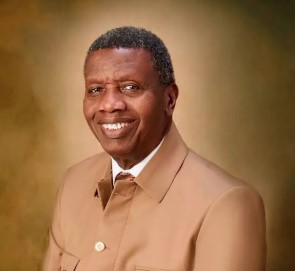
- The 100-Day Diplomatic Plea: Adeboye advised President Tinubu to immediately engage with President Trump to request a 100-day window of grace. This pause would be used to tackle the crisis domestically and prove Nigeria’s commitment to protecting its citizens.
- A Warning on Foreign Aid: The RCCG leader issued a stark warning: “If America should attack us, China is not coming to defend us, Russia will not come to defend us… No other foreign power will come to our aid.” He stressed that while world powers might verbally condemn the U.S. action, they would offer no military assistance, leaving Nigeria vulnerable.
- The 90-Day Ultimatum: Critically, Adeboye told Tinubu to then instruct the Service Chiefs to eliminate terrorists and their sponsors within 90 days or face immediate resignation. His message was clear: Nigeria must solve its own problem of insecurity to preserve its sovereignty.
2. The Core Message: Sovereignty First
The central theme uniting the voices of these pastors is the insistence that Nigeria, as a sovereign nation, has the primary responsibility and the right to resolve its internal security issues. They are challenging the premise that foreign military intervention, particularly under the guise of religious protection, is the appropriate or effective solution.
- Complex Conflicts vs. Simple Genocide: Many influential voices within the Nigerian Christian community, including human rights activists, agree that while Christian persecution is real, the conflicts are often fueled by a complex mix of jihadist ideology, banditry, and resource conflicts that affect both Muslims and Christians. Simplifying the violence to a pure ‘Christian genocide’ is seen as politically expedient for foreign actors but ignores the intricate nature of the domestic crisis.
- Rejecting Intervention: The consensus is that unilateral military action would be catastrophic, destabilizing the entire West African region and leading to massive civilian casualties, regardless of religious affiliation.
3. A Call to Action for Nigeria, Not Washington
These pastors are not just condemning the threat; they are transforming it into a mandate for the Nigerian government. Their trending advice is not aimed at convincing Trump to drop the issue (which they believe is politically motivated anyway) but at forcing President Tinubu to act decisively.
The Nigerian Church’s message is unified: We acknowledge the suffering, we demand government action, but we reject foreign invasion. The fate of Nigeria’s security rests solely with its leaders, and no amount of foreign rhetoric can replace a commitment to domestic accountability.
The conversation sparked by President Trump’s threat continues to demand a strong, sovereign response from Abuja. The voice of the Church is clear: The crisis must be resolved from within.
